Remediation
Biological pathways for safer waste and cleaner growing environments.

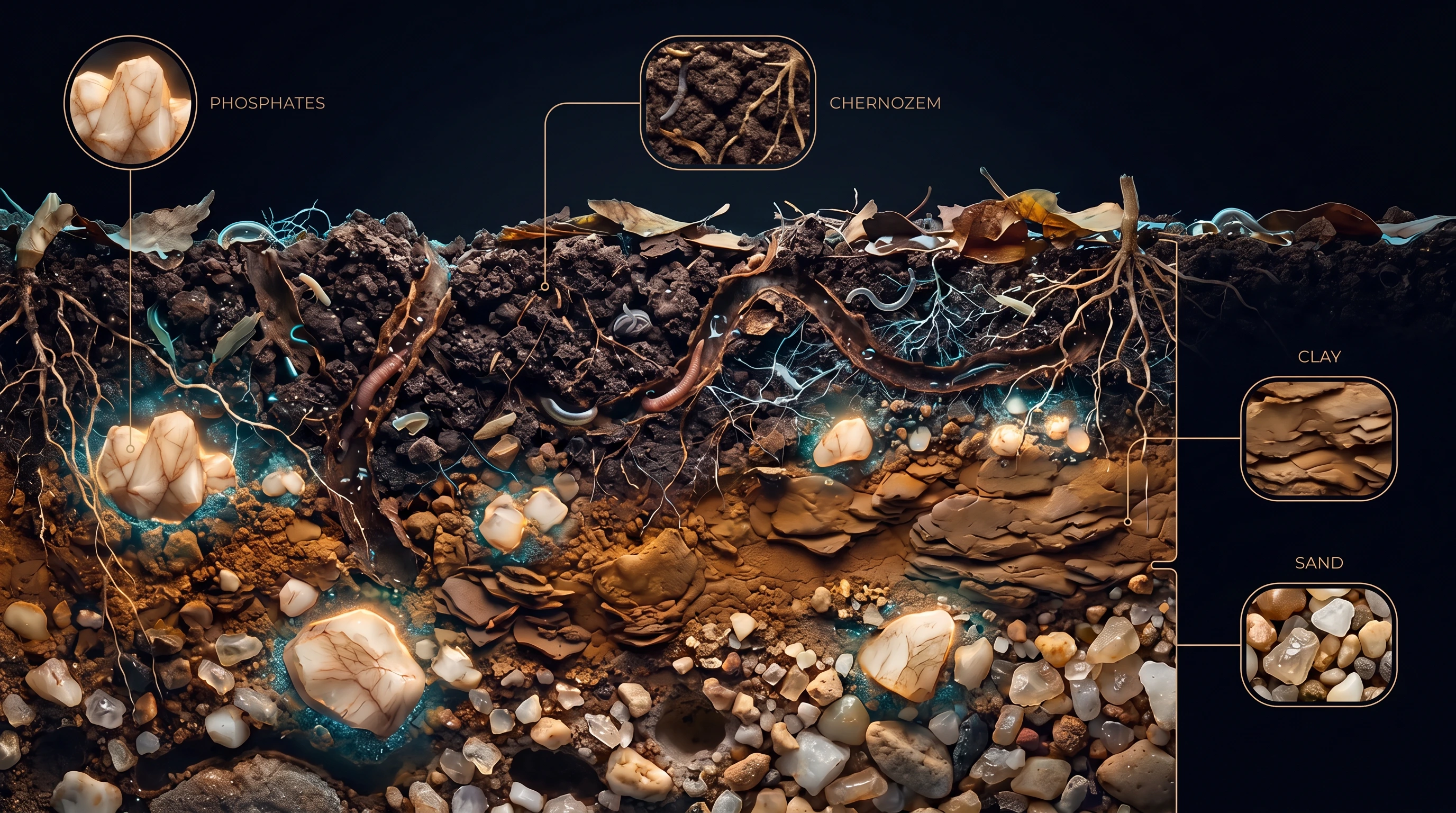
Science-led solutions for soil renewal, safer waste treatment and agriculture adapted to difficult environments.
Living systems can repair what conventional inputs only maintain.
We support research into microbial systems that can reduce the hazard profile of organic waste and pathogens while helping depleted soils recover productive capacity.
Our perspective joins laboratory validation, field economics and responsible deployment. The goal is not a short-lived yield spike, but a healthier and more resilient agricultural system.
Biological pathways for safer waste and cleaner growing environments.
Regenerative approaches to exhausted and arid soils.
Measurement from controlled trials through field deployment.
Soil Renewal
Productive soil is shaped by the interaction of minerals, organic matter, water, roots and microorganisms. Osher explores science-led approaches that consider these elements as one connected system. This perspective can guide more precise responses to depletion, imbalance and difficult growing conditions. The ambition is to support fertility that develops through healthier underlying processes.
Biological Remediation
Organic waste presents both an environmental challenge and a potential source of recoverable value. We consider microbial, biochemical and process-based methods that can reduce hazards and support responsible treatment. Careful characterization and validation should guide how each pathway is selected. This approach seeks to move material from unmanaged burden toward safer, more useful outcomes.
Field Intelligence
No field has exactly the same history of soil, water, climate and cultivation. Osher supports diagnostic approaches that combine laboratory insight with observations from real production environments. Local evidence can help direct inputs where they are relevant and avoid broad interventions without a clear purpose. Precision begins with understanding the conditions beneath each decision.
Nutrient Stewardship
Crop performance depends on how nutrients are available, not simply on how much is applied. We explore systems that consider nutrient balance, root-zone chemistry and timing across the growth cycle. Controlled delivery and biologically informed formulations may help limit avoidable loss. The goal is a more deliberate relationship between plant needs and agricultural inputs.
Resilient Cultivation
Agricultural resilience requires systems that can respond to changing water, temperature and soil conditions. Osher looks at cultivation models that connect regenerative practices, measurement and adaptable management. These capabilities can help producers understand stress earlier and adjust with greater precision. Long-term productivity begins with the capacity to learn from each season.
“A landscape once considered marginal can become an engine of renewal.”Osher